


Background
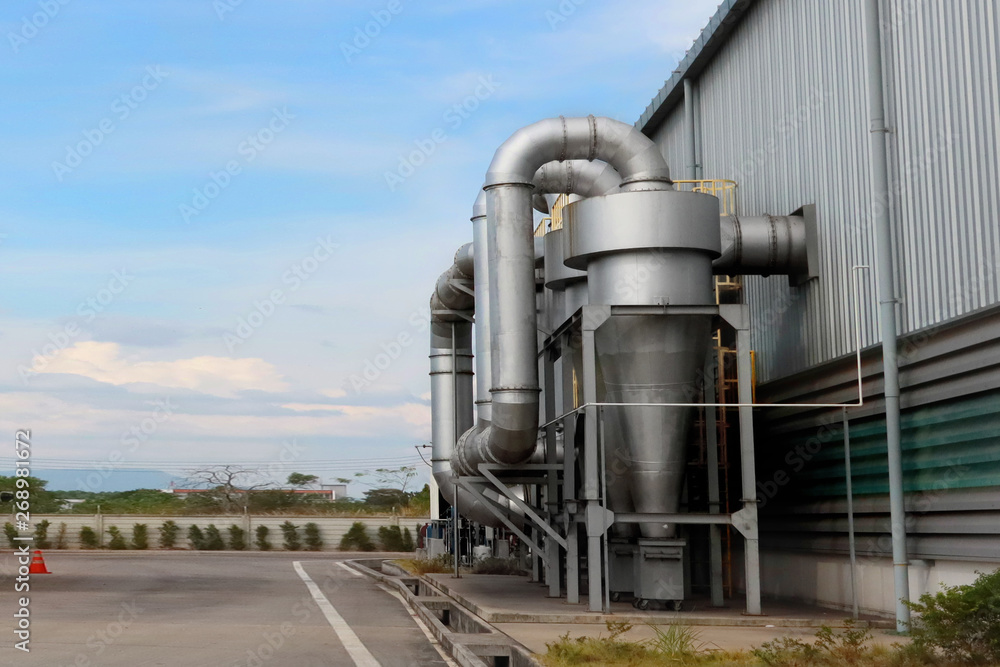
Dust collection systems are found across a wide range of industrial sites. They capture airborne particles created by a manufacturing process, so they don’t create a hazardous environment. Air filtration elements are housed in a “bag house” where the dust-laden air is fed through the filtration units. An automatic cleaning system periodically removes the particles from the filters and passes them into a hopper or collection system. Compressed air provides the energy source for the filtration cleaning process..
Challenge
The facilities superintendent of a large iron casting plant was interested in examining the energy used by various processes within their facility. One process examined was their shake-out table used to remove residual sand from the casting and their dust collection system used to remove resulting particles from the air.
Solution
The Sensor Synergy Energy Aware monitoring solution was chosen to provide continuous monitoring of the system. Sensors were connected to monitor the power consumption of the dust collector main fan and the power to the shake-out table drive motor. . Readings were captured every two seconds and data was stored in a secure cloud server. The Sensor Synergy Portal provided access to the data and visualization tools by authorized users via a web browser.
Findings and Results
In the first three months of the installation, over 90 million data points were collected. The staff targeted one specific work week as a “typical” week of plant operation. Data showed that the dust collector consumes 155 kW of power when operating, the shake-out table drive motor consumes 30 kW, and the air compressor consumes 90 kW.
After analyzing the data for that week, it was found that the dust collection system, which serves only the shake-out table, was shut down eight times, while the shake-out table itself was shut down 77 times. Further examination of the timing revealed that the manually controlled dust collection system was running for more than double the amount of time that it was doing useful work. Considering the company’s blended rate of $0.10/kWh, this resulted in an annualized energy savings of $38,000, along with reduced load on the 100 hp air compressor. To achieve these savings, a simple timer relay was installed to synchronize the operation of the dust collection system with the shake-out table.
Conclusion
Through a combination of Industrial Internet of Things (IIoT) technology, data-driven insights, and a focus on the power consumption of specific operations in comparison to the actual work they perform, the facility superintendent was able to easily identify and quantify the profits being lost by operating equipment during periods when it wasn’t needed. Once the problem was identified, the solution was easy to install and the Sensor Synergy Energy Aware solution was able to track and verify the resulting savings.
In this case, the payback period for the investment in the Sensor Synergy Energy Aware monitoring solution was less than four weeks.